
Y’all, Are We Really Gonna Do This?
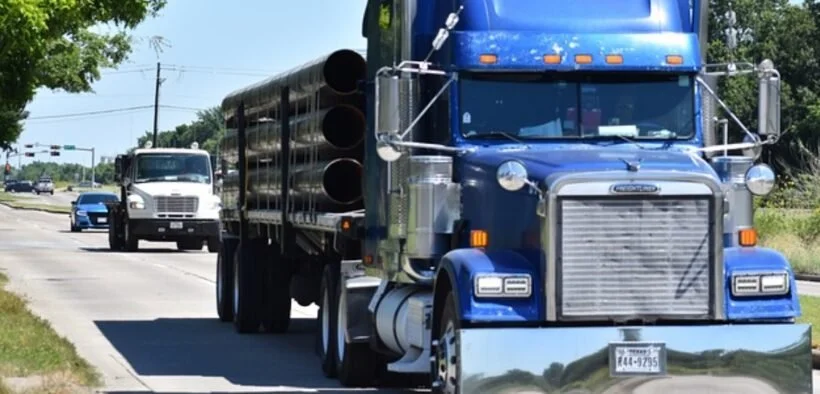
Credit: pickuptrucktalk.com
Many years ago, in one city in the USA (or maybe I should say in at least one city), teenagers had a strange rite of passage. Some might say it was a stupid rite of passage. If these kids’ parents had known, they probably would have grounded them for life. But teenagers have a couple of excuses for doing stupid things. First, they have limited experience. They don’t fully understand the potential consequences of the entertaining things they do. Second, they lack a fully formed brain. The “planning, self-control, and judgment” part (the infamous prefrontal cortex) doesn’t fully develop until about 25. And yet we hand them car keys as teenagers. Yikes.
Anyway, back to the story. In this particular city, the rite of passage involved driving the wrong way down a one-way street. But not just any one-way street. This street was actually a two-way street that split to go around an “island” with multiple houses and trees. As the wrong-way-half-street curved around the island to the left, it was impossible to see what might be coming around the corner. The dare was to go left at the fork in the road, potentially into oncoming traffic.
I never heard of a head-on collision related to these antics – traffic back then wasn’t what it is today. But I suspect there were plenty of close calls and more than a few terrified passengers. I can just imagine someone in the back seat screaming, “Y’all, we’re not really gonna do this, are we?” (Yes, this was a southern city.)
This story makes me think of what’s happening in the world today. We’ve decided to drive the wrong way down a one-way street. The difference is, we can tell what’s coming around the corner, and it’s not good. It’s as if the kids in the car had a drone flying ahead of them showing the oncoming 18-wheeler, and still decided to go left at the fork.
The 18-wheeler coming around the corner at us now carries the consequences of climate change. Those words may make you raise your eyebrows or clinch your jaw, but it’s not complicated. Global average temperatures have been sharply rising for the past 60 years. There are lots of scientific articles and papers documenting this, complete with detailed data and “hockey-stick” graphs. Over 99% of the peer-reviewed papers from the past 30 years demonstrate that rising temperatures are due to the addition of carbon dioxide and other greenhouse gases (GHGs) to the atmosphere by humans, as scientists have predicted for 150 years. But the experts keep publishing articles and we keep doing pretty-much what we’ve been doing - adding more GHGs to the atmosphere.
Climate change articles talk about “variation from historic global mean temperatures” or “the increase in mean temperature compared to global means 1900-2000” (which at 2.77º F doesn’t sound like much). But the data just don’t conjure up the image of the truck that is barreling towards us. So let me put it another way – let’s imagine where we’re headed.
I have a bunch of nieces, nephews, and young friends under 10 years old. To me, they are “very special kids”, or VSKs. Let’s run scenarios for a VSK who’s 5 years old today. If we continue adding greenhouse gases to the atmosphere and temperatures continue to rise at the current rate, what will be happening when she is 25, 35, 45, and 55? These are rough estimates of temperature change based on widely available data:
VSK Age Year Avg. temp. change compared to 2025
25 2046 + .9º F
35 2056 + 1.3º F
45 2066 + 1.9º F
55 2076 + 2.2º F
Doesn’t sound like much, does it? But let’s see what happens when those temperatures rise.
SEA LEVEL RISE
Average sea levels rise related to rising average temperatures for two reasons: 1) ocean temperatures increase and water expands as it gets warmer, and 2) ice on land melts and runs off into the oceans. Based on “intermediate” projections from NOAA Climate.gov, sea level rise may follow the trend shown below:
VSK Age Year Approx. avg. sea level rise (above 2025 level)
25 2046 10”
35 2056 1’ 2”
45 2066 1’ 6”
55 2076 2’
But NASA scientists tell us that sea level doesn’t rise evenly across the globe due to geographical features and ocean dynamics. In some locations, it will rise significantly more. Also, these intermediate projections don’t take into account the effects of “tipping points”, when things start melting faster than anticipated. As sea ice melts, more dark sea surface is exposed (instead of white ice and snow), and the darker surface absorbs more heat from the sun, raising the overall temperature of the oceans and the planet in general, leading to more land ice melting (“reinforcing feedback loop”). The most recent studies from scientists in the US and the Netherlands indicate that sea levels are rising much faster than previously predicted.
The following US cities are already preparing for this, since some of their neighborhoods are below sea level:
New York, Los Angeles, Philadelphia, Houston, San Diego, Baltimore, San Francisco, San Jose, Boston, Jacksonville, New Orleans, Seattle, Portland, Honolulu, Oakland, and Newark.
In addition to direct inundation, many devastating impacts of sea level rise will be delivered via tides and storm surges. In the US, more than a third of the population lives in coastal shoreline counties, where flooding will damage roads, bridges, utilities, and buildings - reducing property values and raising insurance rates. Millions of Americans will be displaced.
Speaking of displacement, worldwide, tens of millions of people will be displaced by the impacts of sea level rise every decade this century. Some of them will relocate within their own countries, but others will be forced to migrate to other countries. The international strife we are now seeing related to immigration is a small sample of what is coming.
By the time my very special kid is an adult, she may not be able to enjoy vacations at the beach the way we did and will have to deal with increased political volatility due to worldwide immigration challenges. If sea levels rise another 2’ or more (as predicted by the time my VSK is age 55), the impact will be catastrophic.
STRESS ON FOOD SUPPLIES
Food producers around the world are already trying to adapt to rising temperatures, more severe droughts, and more extreme weather events. Despite these efforts, a detailed scientific report at nature.com predicts that crop yields for staple crops like wheat, rice, soybeans, and corn will drop anywhere from 15% to 50% in most regions across the globe by 2100 due to rising temperatures. Our food plants and the human technologies to protect them can’t adapt fast enough to deal with the heating, drying, and extreme weather of our changing planet. It’s difficult to project the curve of these crop reductions, but the nature.com report predicts that we will start seeing significant reductions by 2050, when our VSK is only 29 years old.
LOSS OF BIODIVERSITY
When scientist talk about biodiversity, they consider three different types: 1) genetic diversity among members of a species in an area, 2) species diversity in the area, and 3) the diversity of types of habitats and ecosystems in a given territory. In general, the more we have of all these types of diversity, the more stable and healthy life on the planet is (including us). Sadly, all types of biodiversity are being negatively impacted by warming temperatures.
The effects of rising temperatures on life around the world are complex. Animals and plants are threatened due to their need for stable temperatures combined with limited ability to migrate, by death of key species needed to support others, by increased ocean temperatures and related acidification, by loss of fresh water supplies, by extreme weather events, by disruption of seasonal events that support reproductive success, and by the competitive success of non-native species in new locations.
Due to increasing temperatures and other human impacts, species diversity and numbers of wild animals are both clearly in decline. Although we don’t know the total number of different species on the planet, the ones that scientists have identified and are tracking have declined significantly. According to NatureServe’s report, Biodiversity in Focus: United States Edition, among the species studied, 34% of our plants and 40% of our animals are at risk of extinction, and 41% of our ecosystems are at risk of collapse. This is due to many factors, but increasing temperatures are a big part of the problem.
My very special kid may never have the opportunity to encounter much of the wildlife that I’ve seen or to share it with her children. And the medicinal benefits that are or could be derived from these threatened species will be unavailable.
WHAT NOW?
We’ve already taken the left fork in the road, and the 18-wheeler is barreling towards us. “Y’all, we’re not really gonna do this, are we?” Are we really going to pass along a world with fewer livable cities, more human displacement and international strife, a food crisis, and shrinking wildlife to our very special kids?
Many of these trends are not totally reversable at this point – we can’t do a U-turn. As of now, we don’t have effective ways of removing greenhouse gases from the atmosphere at a large scale. But we can prevent total disaster. We can grab the steering wheel and dodge the oncoming truck. We can transition away from fossil fuels as quickly as possible to minimize the deadly impact of rising temperatures.
I’ll write about how we do that in my next post. And you can rest assured it’s not a solitary undertaking - we’re all in this together.