
Earth Day is Almost Here!
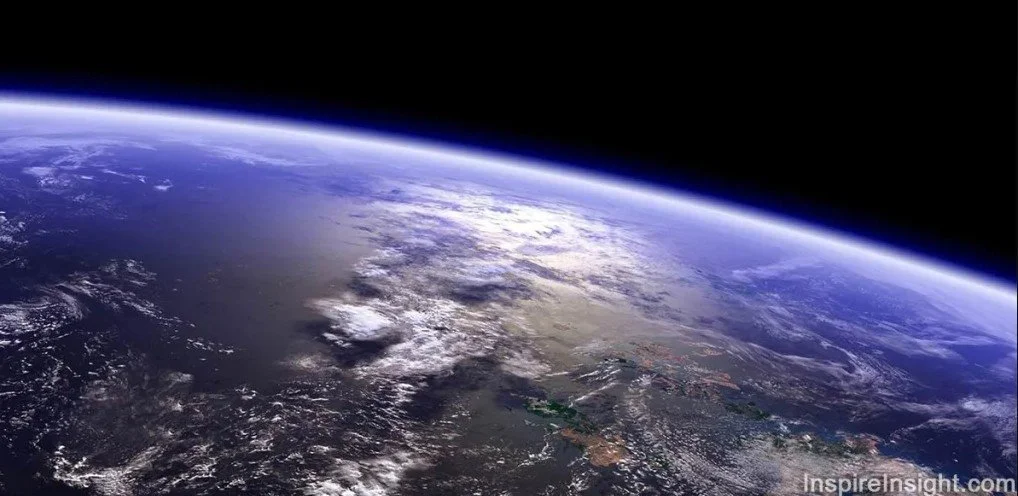
If you’re like me, you figure every day is Earth Day, right? But there is one day of the year that is known as Earth Day around the world, and that’s April 22. That day has been recognized since 1970 as a day to gather together, lift our voices, take action, and show our love for Planet Earth! What a cool idea. But where did it come from?
Post World War II, in the 1940s and 50s, the US experienced a period of unprecedented economic growth, exemplified by the expansion of the suburbs, increased car and plane travel, and expanding consumerism. Things were booming, and many Americans experienced a prosperity beyond what earlier generations had even imagined. But the boom had a downside that most people were blissfully unaware of – air, water, and land pollution. Some communities started seeing their water turn brown, health problems increasing, or wildlife diminishing, but many folks were unaware of the severity of these issues until publication of Rachel Carson’s book, Silent Spring, in 1962. This seminal work is widely credited with helping launch the modern environmental movement, due to its popularity across the country and around the world. Carson was a marine biologist, conservationist, and author who through her research became concerned about the impact on wildlife of the excessive use of pesticides in the US. She spent four years researching the topic and writing the book, which was first released as a series in The New Yorker starting in June of 1962, then published in hardback and selected by the “Book of the Month Club” as one of their promoted books in October of that year. It soon sold more than 500,000 copies in 24 countries.
Throughout the 60s, the nascent environmental movement continued to grow, often led by disproportionately impacted communities, like inner-city St. Louis residents (lead poisoning) and California farmworkers (pesticide exposure). The wider public also began to pressure governments at all levels to take action to protect the natural world. In 1966, the Endangered Species Preservation Act established the first federal list of endangered species in the US and outlawed the harming of those species.
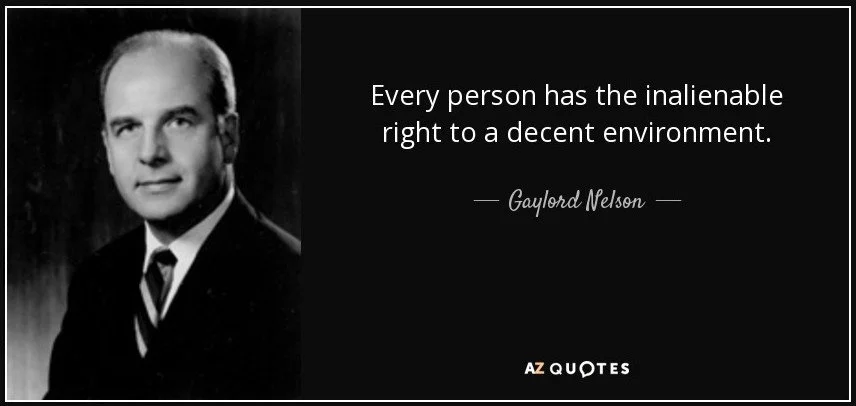
One of the people who had long been concerned about the deterioration of the environment was Gaylord Nelson, the junior senator from Wisconsin. In January of 1969, Nelson and the people of Santa Barbara witnessed a massive oil spill, leaking 200,000 gallons of crude oil into the ocean and wreaking environmental devastation on the coastline. After years of trying to build interest in environmental protection among his colleagues, Senator Nelson finally decided to turn to the people. He envisioned a nationwide movement like the uprising against the Vietnam War, and reached across the aisle to Congressman Pete McCloskey to begin planning. Nelson’s idea was to hold “teach-ins” at college campuses across the country, so he recruited a young activist named Denis Hayes to organize the teach-ins and expand the plan to the broader public. Hayes realized that a key constituency to making the plan work would be young women with small children, who were concerned about environmental threats to their families. Between those women, college students, and others already in the movement, Hayes built a national staff of 85 people to generate and promote events across the country. By naming the event “Earth Day”, the efforts got the attention of media outlets across the country and things exploded from there. The first Earth Day inspired 20 million Americans (10% of the population at that time) to take to the streets, parks, and other gathering places to demonstrate against the damage being done to the environment by industrial development.
Since then, Earth Day has expanded every year and spread across the globe. Now, more than a billion people participate in Earth Day activities in over 190 countries around the world. Learn more at the official Earth Day website and find events near you on their Earth Day Events page!
As Senator Gaylord Nelson, Congressman Pete McCloskey, and Denis Hayes all understood 56 years ago, we’re all in this together.