
The Power of the Consumer
The framework provided by Kimberly Nicholas (see last post) is not only helpful in focusing “climate actions.” It’s also useful for finding ways to reduce our impact on nature in lots of ways, like supporting clean air, clean water, and healthy habitats. In the next few posts, I’ll do a deeper dive on how you can support nature in multiple ways through each of those key roles.
The first role is consumer. That word reminds me of Jon Alexander’s excellent book, Citizens: Why the Key to Fixing Everything is All of Us. In it, he lays out the idea that as members of a society, we can be “Subjects”, “Consumers”, or “Citizens”, and that in recent history we have become entrenched in the consumer role, leading to problems for society and for individuals. I believe thinking about our consumer role is the first step on the road to embracing the more powerful role of citizen.
The three greatest opportunities for reducing your climate impact as a consumer – driving gas (and diesel) vehicles less, flying less, and eating less red meat – also happen to be great ways to reduce other negative impacts on the environment.
Driving Less
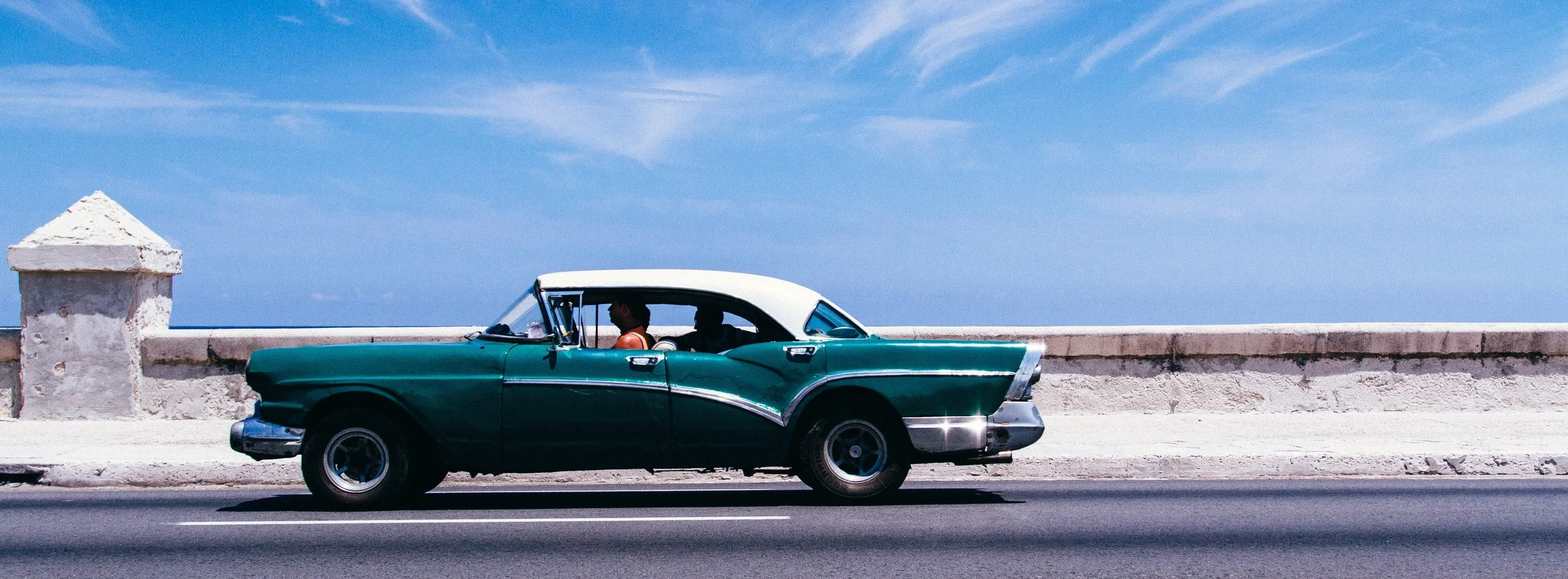
The US is a car-loving nation. Having a car and being able to drive anywhere you want, any time you want, is a hallmark of American personal independence. For the past 100 years our society has developed in ways that reflect and reinforce this identity – from the demise of public transit in cities to make way for car traffic to the development of sprawling suburbs across the country. Since most cars and trucks burn gas or diesel, they’re the source of the largest part of the “carbon footprint” for most Americans, presenting the biggest opportunity for reduction of impact.
But what are the other benefits to driving less? One is simply cleaner air for everyone to breathe. In addition to carbon dioxide and other greenhouse gases, cars that burn fuel also emit smog-forming gases that stay near the ground and trigger diseases like asthma, emphysema, and chronic bronchitis. Despite dramatic reductions in air pollution from vehicles thanks to the Clean Air Act, the American Lung Association reports that in 2025 nearly half of Americans were still exposed to unhealthy levels of air pollution.
Driving less will also reduce environmental impacts from extracting and transporting gas and diesel. We’ve all heard about the big oil spills over the years, like the Exxon Valdez incident and the Deepwater Horizon explosion, which together killed more than 500,000 sea and land animals in addition to 8.3 billion oysters along the gulf coast. But according to the National Resources Defense Council, the vast majority of oil pollution in waterways comes from smaller sources, including oil and gas leaks from cars. Those leaks wash into storm systems and pollute streams, rivers, bays, and oceans. Abandoned and damaged oil pipelines also cause pollution of waterways and soils. The non-profit Frontier Group estimates that in the past 20 years, pipeline spills have released more than 750,000 barrels of oil into the environment. Less demand for gas and diesel will lead to fewer oil pipelines and fewer leaks.
So much of our driving is habitual. We rarely think twice about jumping into the car. But most of us could do much better with a little thought. By planning and consolidating trips, not idling when you don’t have to, exploring public transportation, carpooling, going electric or hybrid when vehicles need replacement, biking, or walking, we can save money, improve our health, and reduce our impact on nature.
Flying less
I remember the first time I traveled by plane. I was eight years old, and my family flew from Louisiana to visit my grandparents in Minnesota. Flying turned a multi-day journey by car or train into a 4–5 -hour trip. In the decades since then, we in the US have come to take plane travel for granted. Most of us love to travel, and commercial flight makes it possible for us to see the world and to spend more time with our distant loved ones. But as we buy those plane tickets, we rarely factor-in what that decision does to life on the planet.
Aviation has a huge impact on the climate, not only due to greenhouse gas emissions, but also from vapor trails and cloud formations that also trap heat. In addition, the burning of jet fuel releases particulate matter and lead, polluting the air we breathe, increasing rates of a variety of diseases. And the chemical mix used for de-icing planes often runs off onto adjacent land or into waterways, introducing poisons into local habitats.
So, what do we do? If you’re not one of the 1% who are flying around the world multiple times a year, your contribution is relatively small. But if you’re flying at all, it’s not insignificant. Depending on the distance, the effects of one round-trip flight can equal the effects of driving a gas-powered car for a year! Fortunately, the Union of Concerned Scientists has created a Vacation Traveler Carbon Guide to help us assess our choices. It compares 6 different travel options [motor coach (bus), train, economy flight, car, SUV, and first-class flight] for a single traveler, two travelers, or a family of four, and ranks them from best to worst options.
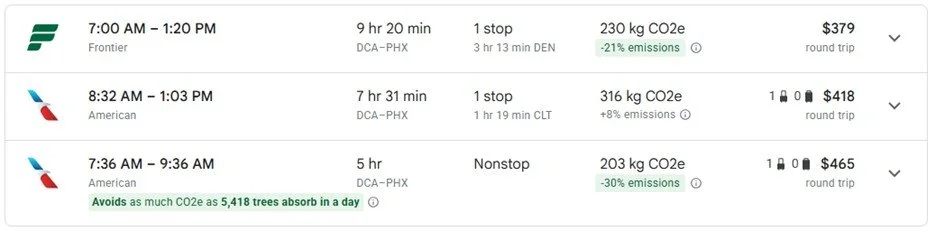
If you do decide to fly, you can evaluate not only the cost and time impact of your flight, but also the environmental impact. Most flight search engines now include comparative emissions data.
The bottom line – don’t beat yourself up over one flight a year to see your nearest and dearest, but do put some thought into every plane trip you make. (Taking the train can be a great adventure!)
Eating Less Meat
If you’re a big consumer of beef, lamb, or dairy products, I have great news for you – there’s an easy way to reduce your environmental impact! You don’t have to become a vegan to make a difference, just cut back. Here’s why and how.
For simplicity’s sake, I’ll focus on cattle. The care, feeding, transportation, and processing of beef and dairy products has a huge impact on the planet, including greenhouse gas emissions, deforestation, less productive use of land, and water and land pollution. Here are a few examples of those impacts:
Cattle are ruminants, meaning that when they digest their food, they generate a lot of methane gas (from both ends). Methane is a powerful heat-trapping gas, with more than 80 times the warming potential of carbon dioxide. Less demand for beef = fewer cows = less methane in the atmosphere.
Water pollution is another major issue with cattle ranching. The vast amount of manure produced by cattle is generally not well-managed, creating runoff of pathogens and excess nutrients that degrade aquatic ecosystems, killing plants and fish and making water unsafe for recreation or human consumption.
Raising cattle requires a tremendous amount of land and feed, which is often made available through extensive deforestation. Forests are the best “carbon sink” we have to get carbon dioxide out of the air and back into the plants and the ground, as well as being the habitat for many species of plants and animals. Since 2001, the world has lost 45.1 million hectares of forest (an area larger than South Carolina, North Carolina, Virginia, West Virginia, and Maryland combined) to cattle farming, and that devastation continues every year.
According to Our World in Data, if the land used for raising cattle and generating cattle feed were instead used for production of fruits, vegetables, legumes, and grains for people to eat, we would only need 1/4 as much land to produce the same amount of calories and protein. With world population expected to reach 9 billion before 2040, the earth simply can’t continue to support meat-heavy diets.
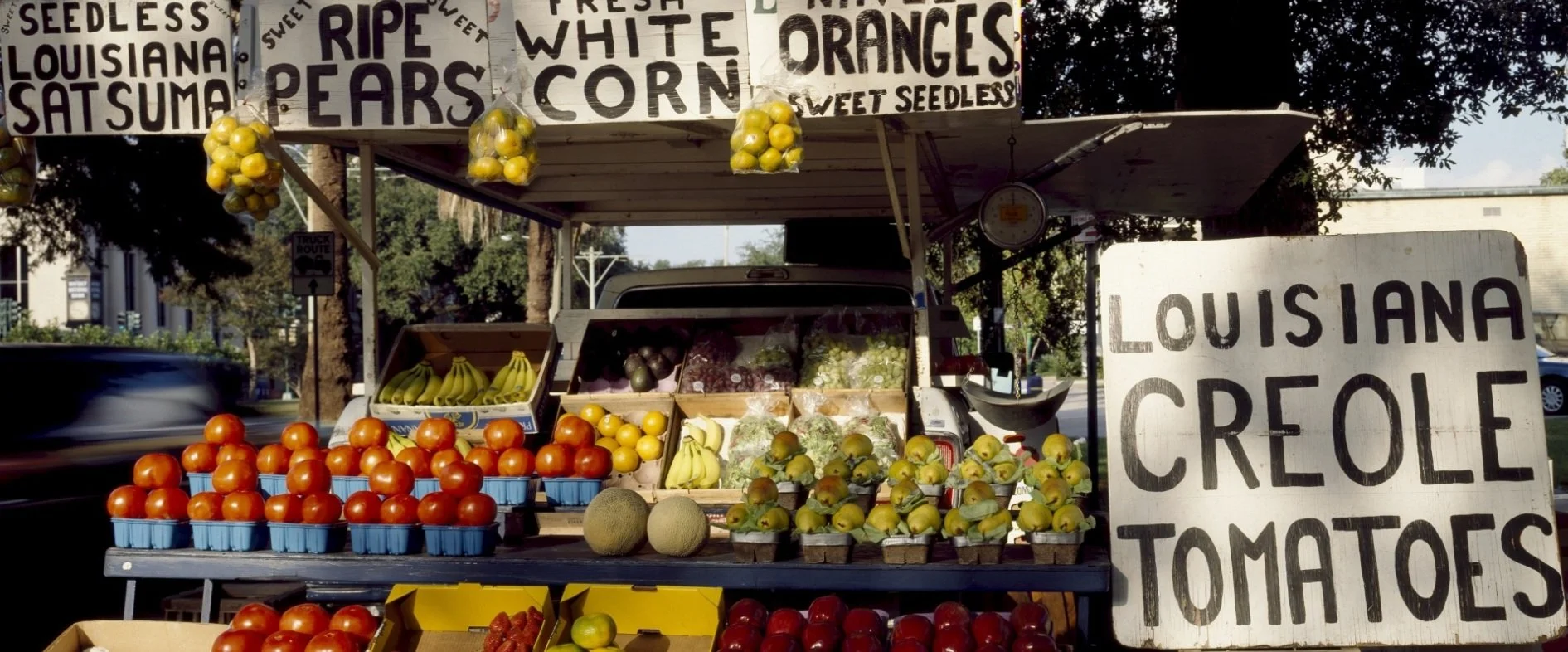
“But I love beef!” you plead. Well, don’t panic. The idea of dropping all red meat from your diet may be unrealistic. What is possible, though, is reducing your consumption. Step one, consider smaller serving sizes – enjoy your meat without having it take up half your plate. Second, swap out red meat for some other protein, like chicken or fish. Third, declare certain days totally meat-free. Experiment with delicious meat-free recipes. If you’re not sold on the idea, visit a vegetarian restaurant or have a meat-free meal at an Indian restaurant – you may discover new flavors to love and get ideas for creating masterpieces in your own kitchen. Finally, buy produce at a farmers’ market or grow some vegetables of your own. You may be shocked at how much more flavorful fresh produce is compared to anything you buy at a big grocery store.
It’s hard to believe that these little changes in your behavior as a consumer can really make a difference. But like a drop in a lake, the ripples spread. Remember, we’re all in this together, and you are an influencer!
Sources: ccs.umich.edu, epa.gov, lung.org, darrp.noaa.gov, ocean.si.edu, nrdc.org, frontiergroup.org, science.org, ce.washington.edu, scientificamerican.com, edf.org