
People Marking a Difference in Arkansas
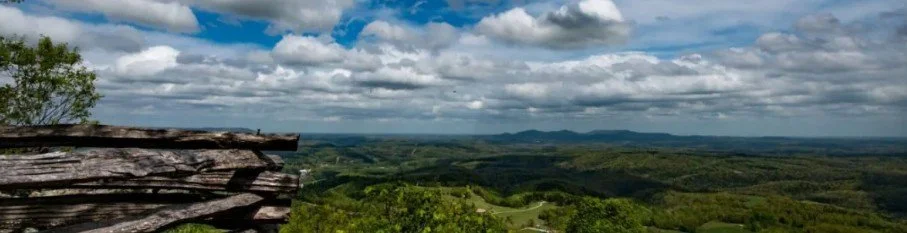
Photo credit: Keisha McKinney, bigpittstop.com
Earlier this week I stumbled across a terrific LinkedIn post by Mahbooben Hemmati that opened my eyes to the amazing things that are happening in Fayetteville, AK. Mahbooben is a member of the City of Fayetteville’s Environmental Action Committee, and she posted an update on the progress they’re making on greening this city of 100,000+ residents. (I’ve never been there, but now I’m thinking maybe I need to check it out.) Here are a few of the Fayetteville fun facts she shared:
The city’s Climate Action Plan includes 82 solutions – 13 of which have been completed and 44 which are underway. These solutions focus on:
reducing greenhouse gas emissions,
advancing nature-based solutions, and
supporting climate equity.
The city has reached 93% clean energy for municipal operations – well on their way to a goal of 100% by 2030.
Since 2010, municipal GHG emissions are down approximately 72% and per-capita emissions have fallen 44%.
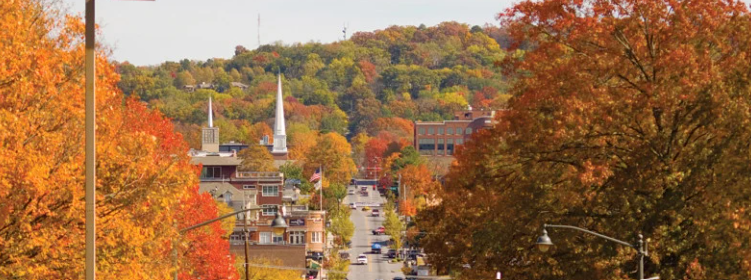
Photo source: downtownfay.org
Hemmati’s post raised my curiosity, so I went down the NW Arkansas rabbit hole. What I found was that Fayetteville was one of the subjects of the New York Times’ “50 States, 50 Fixes” series in 2025. That piece describes Fayetteville’s long and colorful history of environmental activism, including one grandmother who took up residence in a tree for a few weeks in a failed attempt to halt the removal of mature oaks to build a retail development. It’s clear that Fayetteville’s Climate Action Plan is not a flavor-of-the-month or a flash-in-the-pan, but is a continuation of their conservation history. In addition to moving towards full electrification with clean energy, Fayetteville also has a successful composting program that helps local farmers enrich their soils and reduce weed growth, and they’ve implemented incentives for owners to conserve local lands and to reduce impervious surfaces for improvement of rainwater absorption and filtering.
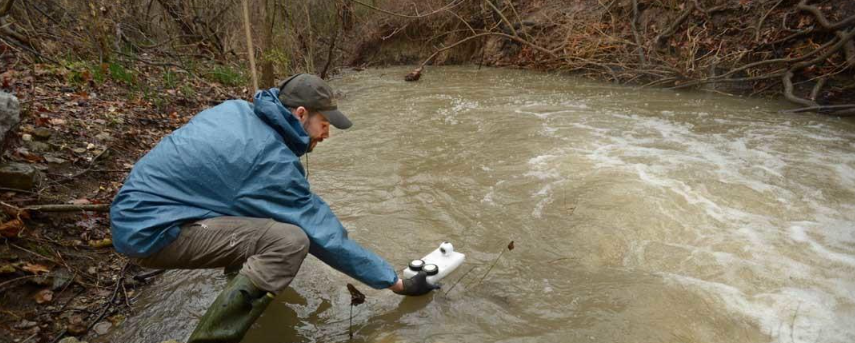
Of course, I wanted to know about the folks behind these efforts, and there are a bunch of them. Fayetteville’s success is a community effort with multiple strong leaders. Some key players named in the NYT piece are City Environmental Director Peter Nierengarten, local farmer Morgan Boehm of Middle Fork Farm, City Council Member Teresa Turk, and Mayor Molly Rawn. (This rabbit hole had a lot of side tunnels.) Any of those folks could be featured in a blog post, but eventually I stumbled upon someone else who really caught my attention. He’s County Extension Agent Colin Massey. Seeing Massey’s role in local conservation showed me the importance of those unsung heroes, the Cooperative Extension Agents across the country.
Colin Massey Photo Source: NWA Democrat-Gazette
Massey’s name came up in a Fayetteville Flyer article from 10 years ago. It seems that earlier that year the city had teamed-up with NWA Tobacco & Drug Free Coalition members and volunteers from University of Arkansas’ Rock Camp to collect discarded cigarette butts to keep them out of local waterways. After one day of collection, they ended up with more than 11 pounds of butts. Properly disposing of cigarette butts is critical to keeping waterways clean, since these little bits of trash are the most abundant form of plastic waste in the world, they release toxins like arsenic and lead into the water, and they can take up to 10 years to degrade (even then creating microplastic pollution).
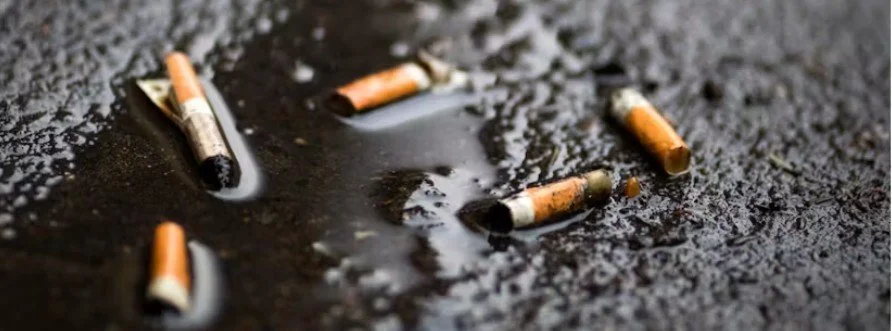
Photo credit: Joel Saget/Getty Images
Colin Massey thought a better approach than periodic cleanups would be to keep them off the ground in the first place. So he decided to install two “Ballot Bins” in Fayetteville to give smokers something more fun to do with their butts.
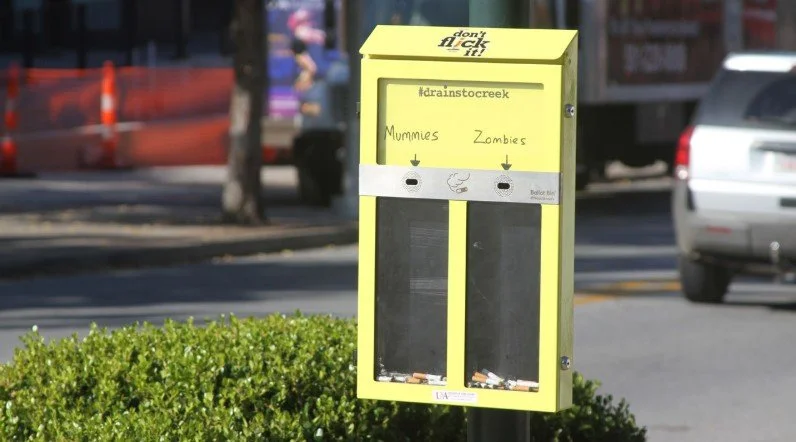
Photo credit: Dustin Bartholomew, Fayetteville Flyer Staff
A “Ballot Bin” is a glass-fronted cigarette butt receptacle divided into two sections, each with its own deposit slot. Phrases can be written above each slot, giving smokers two options to “vote for” by depositing a butt. I’m not sure how this project turned out, but I did discover that lots of cities in Europe have butt Ballot Bins, and they’ve also been used in Halifax, Boston, Pittsburgh and Chicago, as well as at Virginia State University in Richmond.

Photo credit: AntiLitterPGH
But Colin Massey is not a one-trick pony. As a dedicated Northwest Arkansas County Extension Agent, he works every day to make the world a better place. If you’re a city-dweller or suburbanite like me, you might be wondering, “What is an Extension Agent?” According to the Future Farmers of America, “Extension agents are employed by land-grant universities and serve the citizens of that state by serving as an expert or teacher on a topic relating to economics, community development, agriculture, family, animal production, diet and nutrition. They provide learning experiences that empower communities to improve their lives on critical issues.” Massey is definitely an expert and teacher who provides valuable learning experiences to his community, like
In-person training on Raised Bed Gardening, Fruit Tree Pruning, and Native Trees
YouTube Videos on Bush Honeysuckle Control, Composting, and Garden Sanitation (hosted by Marsha Makes)
(BTW – Another side tunnel in this rabbit hole was the UAEX’s Arkansas Insect Festival. Sorry I missed that.)
I don’t know what the other thousands of Extension Agents across the country are doing, but efforts like Massey’s strike me as critical to getting us to live in harmony with nature. He exemplifies the philosophy that we’re all in this together, and he’s working to help his community understand and lend a hand.
For more info on the impacts and management of cigarette waste, check out:
Tiny But Deadly: Your Butt on Plastic (earthday.org article)
What happens to cigarette butts after 10 years in the environment (phys.org article)