
Play With Your Food!
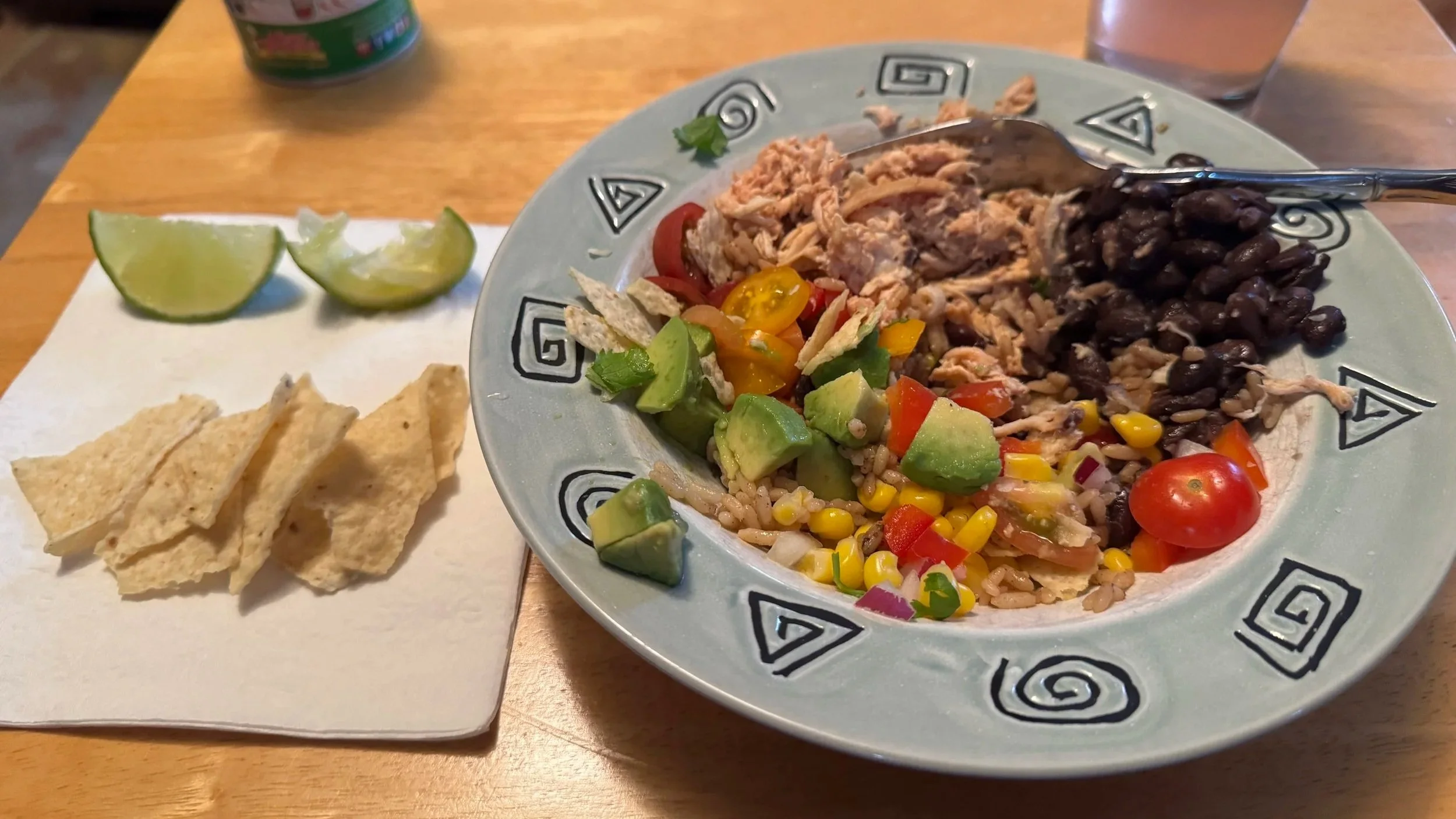
Delicious homemade dinner!
Last night I got to see a real-world example of my mantra, “We’re all in this together,” in action. Our local library system hosts an author talk program called “Arlington Reads,” and last night’s event featured author and ecologist Mark Easter, who just released a beautiful book entitled The Blue Plate: A Food Lover’s Guide to Climate Chaos. The event launched Arlington County’s Climate Action Plan, and Mr. Easter discussed his book and then moderated a panel discussion about the environmental impacts of our food system. The panel included oyster farmer Imani Black, regenerative farmer Samantha Kuhn, and farm-to-table restauranteur Gina Black. What an amazing line-up!
Mark Easter received a B.S. in Electrical Engineering then went on to get an M.S. in Botany, and has spent most of his career studying, analyzing, and writing scientific papers about the carbon footprint of agriculture, forestry, and other land uses. But this book is no dry, scientific tome. Easter understands the power of storytelling, and The Blue Plate is woven through with stories of the beauty and joy of food as well as the impacts our food choices have on the environment.
Imani Black(BS in Biology with a Marine Concentration) has a deep history with the Chesapeake Bay – she descends from a family of watermen in Maryland dating back over 200 years. But her personal passion for marine science was kindled at environmental science camp as a child and grew from there, including interning for the Chesapeake Bay Foundation’s VA Oyster Restoration Team while in college. In 2020, after working in various leadership positions in the shellfish aquaculture industry, Black founded the nonprofit organization Minorities in Aquaculture to educate individuals about the benefits of aquaculture and to grow a viable career pipeline for minorities. Her devotion to oysters and their critical role in the marine ecosystem is contagious!
While Samantha Kuhn was in college (B.S. in Biochemistry, Molecular Biology, and Environmental Sociology) she discovered a passion for community farming. When Kuhn graduated, she brought that passion home. Her father’s business, JK Moving in Sterling, VA, has always supported local charities, and when Chuck Kuhn saw his daughter’s passion for community farming he was inspired to do more. With his support, Samantha Kuhn started the nonprofit JK Community Farm, which provides fresh fruits and vegetables to local food banks in Loudoun County, VA. The farm is focused on regenerative farming practices and developing the soil so that their produce is as nutritious as possible. Kuhn runs the operation with only three full-time employees and lots of volunteers!
As the daughter of a Northern Italian chef, Gina Chersevani was born with a passion for food. After graduating from college (B.S. in Psychology and Fine Arts), Chersevani dove into the food and beverage industry in Washington, DC, quickly becoming famous for her unique cocktails. After spending over 10 years as a star in the local cocktail and culinary scene, Chersevani launch her own spot, Buffalo & Bergen, at Union Market in DC. This enterprise has now grown to three restaurants, with another opening soon in Northern VA (just a couple of miles from my house!). Chersevani’s restaurants use produce from her own garden and local farms, and they are working towards “no-waste” operations – using as many parts of the foods they harvest as possible, composting what they can’t, and purchasing biodegradable and recyclable products whenever they are available. Her other efforts benefiting the community are also notable, including supporting Childhood Cancer Research and No Kid Hungry.
This amazing panel of speakers shared their unique insights on the environmental impacts of our food choices. Since food growth and processing practices can pollute land and waterways, and 30% of greenhouse gas emissions are related to our food system, there is a lot we can do to reduce our impact. The panel’s main points were:
Know where your food comes from. Get to know farmers and fishermen/women in your region and buy food from local suppliers whenever possible. Take advantage of farmers’ markets and CSA (community-supported agriculture) delivery services.
Learn to love foods that are in-season locally. The chemicals, additional water, and shipping that are required to bring you bananas and avocados out of season do tremendous damage to the environment. These items could be considered as periodic treats, not daily or weekly menu items.
Reduce beef consumption. Cows are inefficient at converting what they consume into nutrients for human consumption, and beef production is a major polluter. Again, beef can be a periodic treat instead of a regular menu item.
And I’m adding another recommendation – play with your food! Cooking with local and seasonal fruits and vegetables can be a fun, creative endeavor for you and your family, leading you to new gastronomic adventures!
Remember, we’re all in this together!