
Almost Heaven – Restoring WVA’s Rivers
Source: http://www.forestwander.com (cropped)
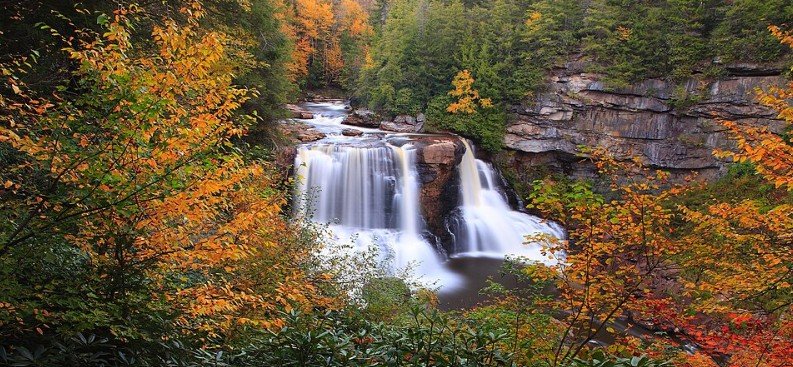
If you’ve ever visited or even driven through the Appalachian Mountains of West Virginia, you understand why John Denver called it “almost heaven.” Winding roads meander through forested hillsides cut through by beautiful streams and raging rivers. The pristine beauty makes you want to pull off the road and stay awhile.
But West Virginia has struggled for years to figure out how to create an economy that works for its residents without destroying this natural beauty. Once buoyed by coal mining, the changing energy landscape has led to a decline in that industry, leaving West Virginia’s economy ranked #47 by US News and World Report. And despite its beautiful landscapes and whitewater rivers, it’s ranked #36 on Natural Environment, due primarily to water pollution from that same industry – coal.
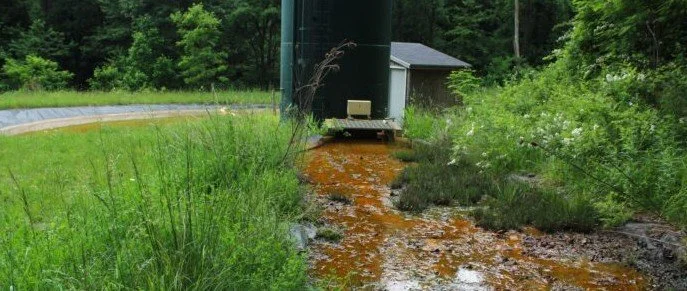
The environmental curse of coal mining is not limited to the ravages of strip mining, the air and land pollution from coal dust, or underground coal fires, it’s also the seemingly never-ending contamination of streams and rivers. During mining operations and long after they’ve ceased, water that flows through and out of the mines is usually highly acidic, containing heavy metals like arsenic, copper, and lead. Layers of rock containing the mineral pyrite, known as “Fool’s Gold” and abundant in West Virginia, are exposed to air and water by mining, causing them to oxidize. This oxidation forms sulphuric acid and dissolved iron, which washes into streams and upsets the PH balance of the water. Needless to say, water that is acidic like vinegar is not good for animals, plants, or humans. This process, known as acid mine drainage (AMD) leaves a tell-tale mark – orange water and orange-stained rocks.
Source: wvpublic.org
But the good people of West Virginia are stepping up to reclaim the health and beauty of their streams and rivers. Groups like Friends of Deckers Creek and Save the Tygart Watershed Association have brought together community members to learn and work on remediation of decades of damage and restoration of their waterways. Citizens are making a real difference. They have spearheaded these efforts by sponsoring their own cleanups, building passive settlement ponds, and partnering with groups like the West Virginia Water Research Institute at West Virginia University and Northeast Natural Energy to collect data and implement larger projects. Creeks and rivers are losing their orange hue and flowing clear again. Plants and animals are returning to their old habitats.
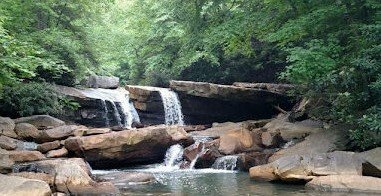
Waterfall in Deckers Creek
Source: Friends of Deckers Creek
These efforts have been largely funded by federal and state grants supplemented by corporate and individual donations, but there may be a way to make river clean-up profitable. It turns out that some of the toxins removed from the water are rare earth elements needed for computers, batteries, solar panels. As the US searches for new sources of these elements, it turns out that removing them from polluted waters is much faster and cheaper than mining them from the earth.
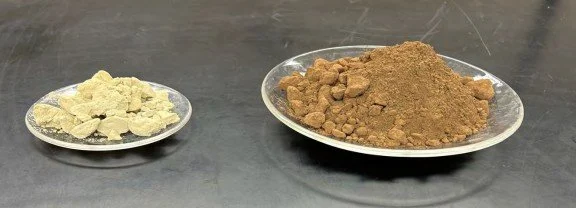
Recovered Rare Earth Elements
The solutions needed to restore the beauty and value of natural spaces already exist. All we need are the vision and determination to implement them. As the folks in West Virginia remind us, we are all in this together. Individuals, communities, governments, universities, and smart businesses can come together to build the future our children and grandchildren deserve.