
The Environmental Paradox of Cities
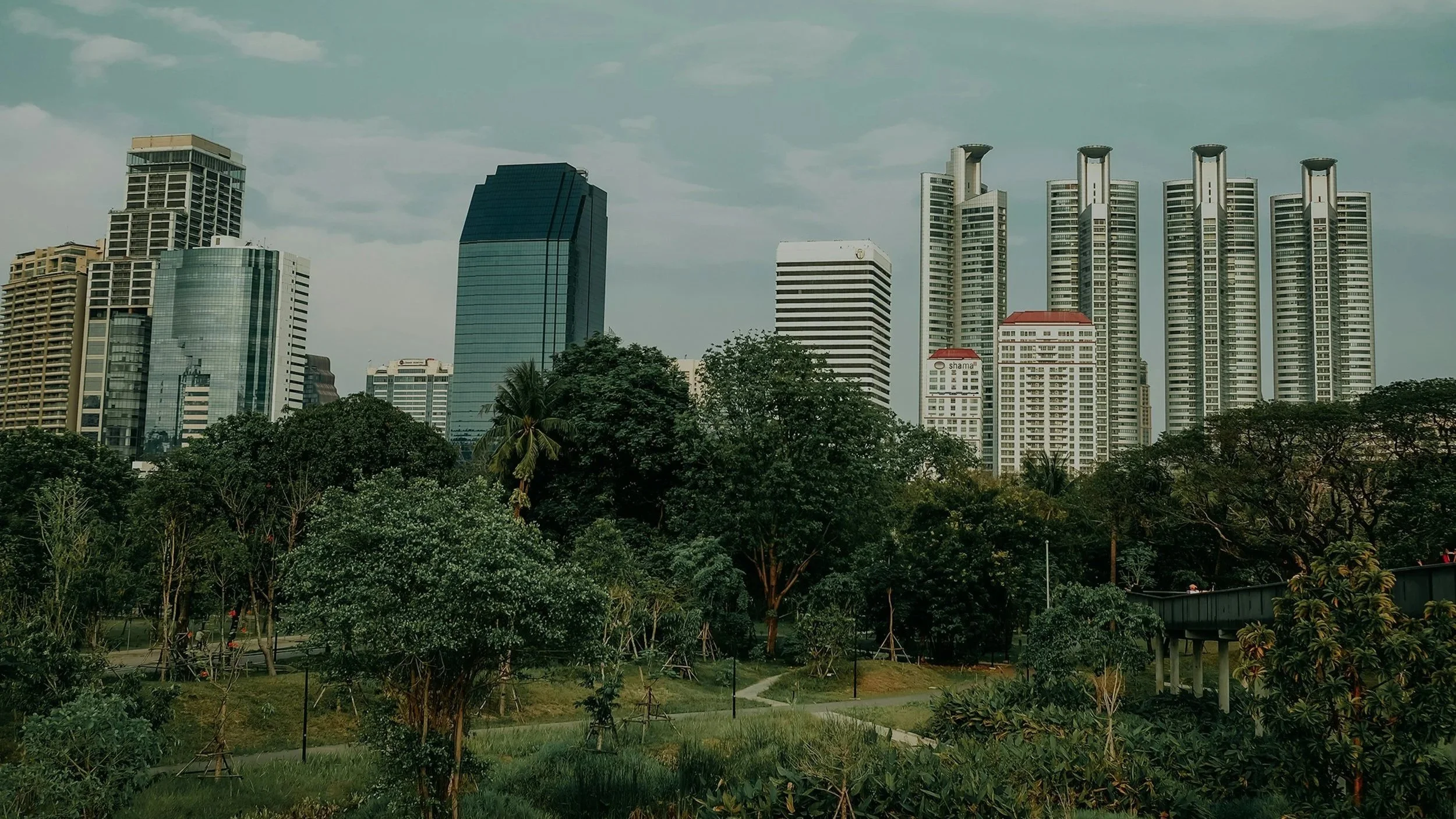
City Skyline
A few years, ago I took a class on “The Challenge of Biodiversity” at George Mason University here in Virginia, and my final research project was entitled “How Can We Continue the Development of Cities and Conserve Biodiversity in Urban Areas?” Doesn’t exactly roll off the tongue, but that was the question I wanted to try to answer. (If you really like reading scientific research papers, let me know and I’ll share it with you.)
This question intrigued me because I know that concentrating human residence and activities in limited areas protects other habitats, but that same human concentration also too often severs the important connection between people and the rest of the natural world. You see, if we don’t regularly notice and appreciate nature, we forget its value and our responsibility to preserve it. (See: The Pigeon Paradox)
As human population continues to grow, our challenge is to shift the way we think about cities – to view them as places where people, other animals, and plants can coexist, enjoying and benefitting from each other. We must build and rebuild in ways that protect and support locally native flora and fauna, while bringing people together in ways that reduce our environmental impact and enhance community joy. What does that mean?
Understanding local ecosystems – what ecosystems still exist and what was there before our buildings,
Learning what specific plants and animals are native to an area and what conditions and how much land or water they need to flourish,
Determining where ecosystems are continuous through our cities and where they’ve been interrupted by buildings and streets,
Planning and executing development and redevelopment that concentrates areas of human activity and makes access to those activities walkable or available via public transit,
Protecting existing wild areas,
Designing and constructing buildings that minimize our impact on the environment, and
Integrating appropriate green (and blue) spaces that are biologically balanced, expansive, continuous, and can be enjoyed by people.
Just imagine all the people and expertise needed to make this happen! It’s clearly more than one isolated group can accomplish. This kind of wise growth depends on government planners, architects and engineers, contractors, engaged community members of all ages, and experts in biology, meteorology, geography, building materials, computer applications, data analysis, and communication (among other things!). And as fast as the world changes, we don’t have the luxury of slowly handing things off from one person or group to another – success depends upon collaboration.
Fortunately, there are communities around the world that are already doing this. For a few examples:
Since 2010, the city of Austin, TX, has been planning and executing programs to “assure a more just and sustainable future for all,” involving city government, local business leaders, neighborhood organizations, K-12 schools, and experts from nearby universities. Their accomplishments in the past 15 years (as their city continues to grow) are too many to list – just check out their website!
Portland, OR, is always near the top of the list for nature protection initiatives. They’ve been focused on reducing environmental impact and improving resiliency for more than 20 years, including protecting urban wildlife. A few years ago, the National Wildlife Federation recognized Portland as the #3 wildlife-friendly city in the country, thanks to efforts by the city government, schools, volunteer organizations, and individuals committed to making their own yards nature-friendly.
Of course, for inspiration in protecting urban biodiversity, there are many examples in Europe. One surprising case is the large, busy, port city of Rotterdam in the Netherlands, which has become a world leader in sustainability. Not only are they paying attention to waste management, green roofs, energy use, and resiliency planning, they’re also working to support biodiversity. The Port of Rotterdam Authority is on a mission to build economic development and restore and conserve local biodiversity, emphasizing that “collaboration with governments, social organizations and companies is essential” to realizing their ambitions.
Remember, we’re all in this together. If your organization wants to find or expand its role in this collaborative process, let’s talk.