
Going Up Green
Those of you who’ve worked with me in sustainability over the past few years won’t be surprised by my next subject for the “people who are making a difference” series. This guy, Alistair Law, has used his engineering know-how, experience, and imagination to create what I think is one of the most beautiful and promising technologies in the fight to keep the world beautiful and healthy – Vertical Meadow.
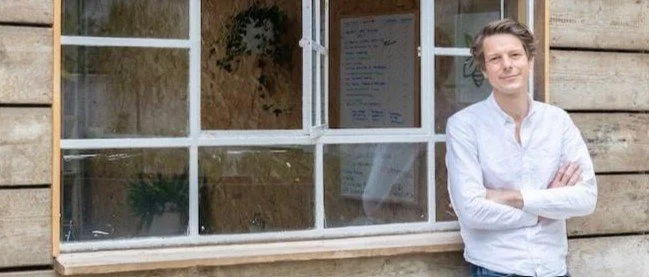
Alistair Law
When you hear the words “Vertical Meadow,” you may think of a typical “green wall” in or on a building. But let me assure you that a Vertical Meadow, while technically a green wall, is much more than that. It is a wall designed to bring in the plants and pollinators that are native to an area back into the city, making it more beautiful, interesting, and healthier in a self-sustaining way. I find it magical.
But I’m getting ahead of myself. First, a little history. Alistair Law is an Engineer in the UK with a background in Industrial Design. He’s worked on all sorts of engineering projects, and was a Project Manager with Arup in 2012 when he first started thinking about growing things on the vertical plane. Arup had sent Alistair to Paris to work on research projects developing sustainable architectural ideas, and as he tended the plants growing on his Parisian balcony, he started ruminating about those typical green walls. As he considered their complicated engineering, their logistical challenges, and the carbon impact of building those walls, he thought there must be a better way.
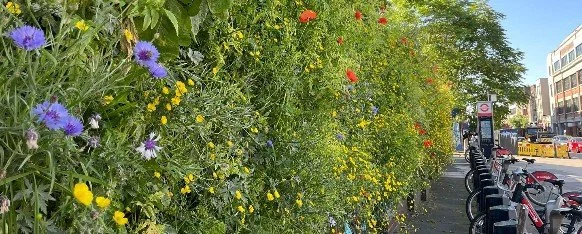
Vertical Meadow, 1 Victoria, London
After years of research and planning, capped off by the Covid lockdown year, Alistair launched Vertical Meadow in 2021 with support from Arup. The unique design is a living wall composed of local plants selected to thrive in the designated environment, grown from seeds planted in a lightweight matt structure that includes an irrigation system as well as power and Wi-Fi to monitor the condition of the wall. The original Vertical Meadow system was created to be installed on construction scaffolding or fencing (or “hoarding” as they call it in the UK). The company has since developed a living rainscreen facade for permanent installation on buildings (including data centers!). Both of those products are now available, along with the opportunity to work with Vertical Meadow on “bespoke” applications that require customization. It would be lovely if we could create more parkland in our cities, but since most cities don’t have that option, why not go vertical?
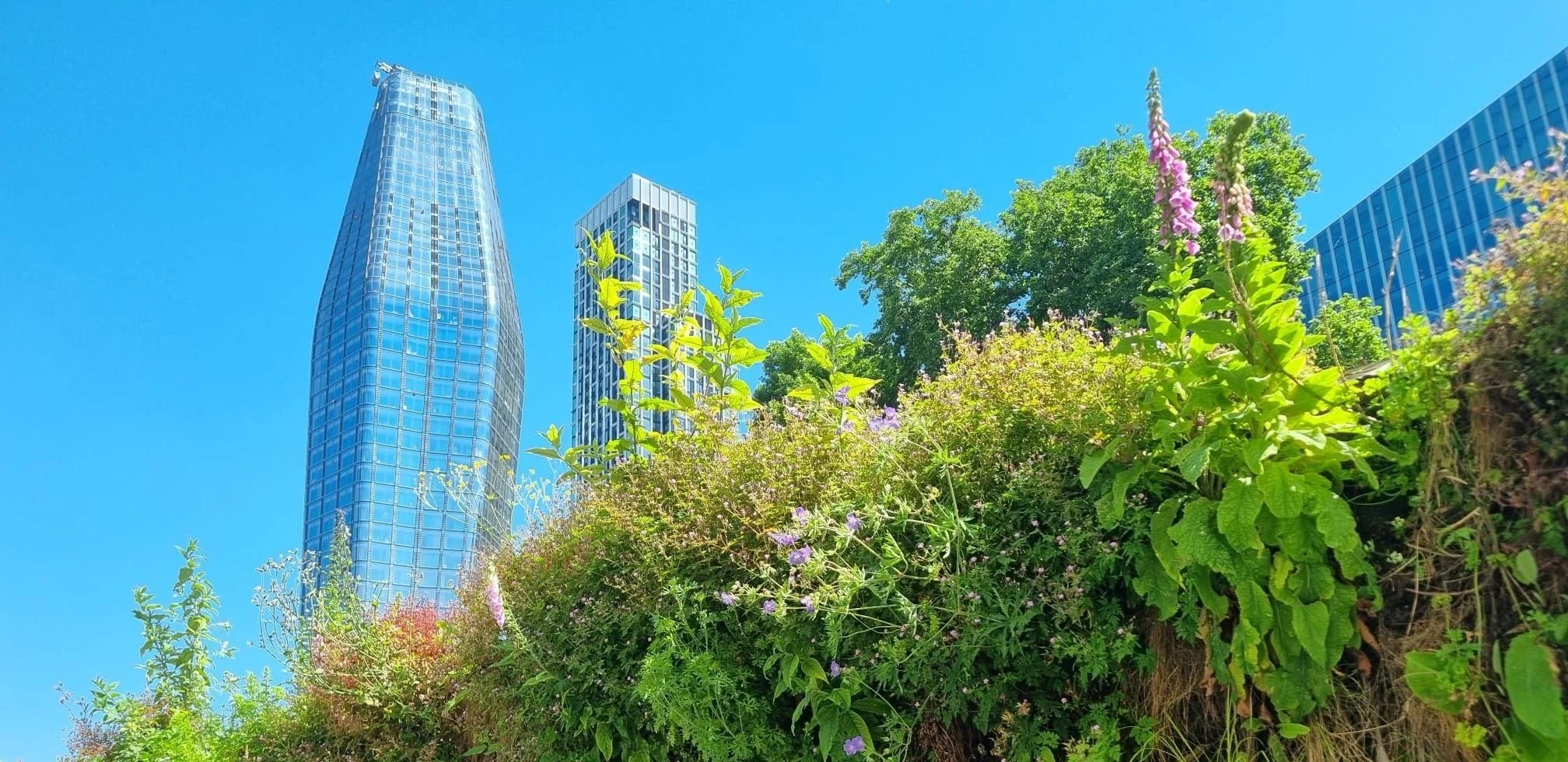
Blackfriars Living Wall
The idea of a native plant wall in a city makes so much sense. We need cities. Cities are exciting, innovative places where many new ideas are born. They are the engines that run our economies. And they are the places where we can concentrate people to avoid further damage to spaces where other animals thrive. But people in cities need the physical and mental health benefits of living things, too. According toPsychology Today, regular exposure to plant life has measurable positive impacts on our well-being, like stress reduction, decreased depression, stronger memory retention, and higher levels of both creativity and productivity! Another huge benefit of a living wall is the carbon sequestration: more plants = less carbon dioxide in the atmosphere.
But maybe the best reason to install Vertical Meadows everywhere has only come to light now that they’re growing and blooming across London. Alistair and his team always knew that these walls would reduce temperatures in the city, and now they can show how much - and it’s stunning. During last week’s blazing heat wave in England, the temperature at the Vertical Meadow headquarters living wall was more than 25ºF cooler than the temperature in the courtyard! (You can check my conversion math, if you want.)
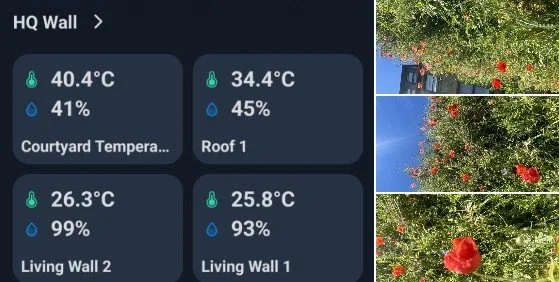
The Cooling Effect of a Vertical Meadow
There is so much more to this story, I encourage you to do a deep dive on their website and check-out recent LinkedIn posts. In the past five years, Vertical Meadow has spread native plants and wildflowers all over London and they’re now branching out into other parts of the UK. This year they did an installation in Australia! But I’m sorry to report that they haven’t made it to the US yet. So how did I learn about Vertical Meadow? That’s a whole ’nother story! A few years ago, when I was knee-deep in construction sustainability at Turner, my sister was working for the Howard Hughes Medical Institute (HHMI). Knowing my passion for conservation, she sent me a link to a nature documentary series called “Wild Hope” that was being produced for PBS by HHMI’s Tangled Bank Studios, “highlighting the intrepid changemakers who are restoring and protecting our planet.” One of those intrepid changemakers was Alistair Law. I’ve been following the Vertical Meadow journey ever since, trying to figure out a way to get them over here.
Maybe one of y’all can help with that, seeing as how we’re all in this together. Let me know if you need support in planning and executing a collaboration with Alistair and Vertical Meadow - I’d love to facilitate!
Credit: All photos provided by Vertical Meadow